

Managing IT infrastructure can be complex and resource-intensive, especially as a business grows. What worked at fifteen employees does not always hold up at fifty, and the cost of ad hoc fixes accumulates quietly: unplanned downtime, security exposure, and the kind of slow drag where simple tasks take a little longer than they should. IT managed services exist to put that back under control by giving a business a consistent operating model for its technology.
At Rudolph Technology & Associates we deliver comprehensive managed IT services designed to simplify operations and boost productivity. The components below are the building blocks of a typical managed engagement.
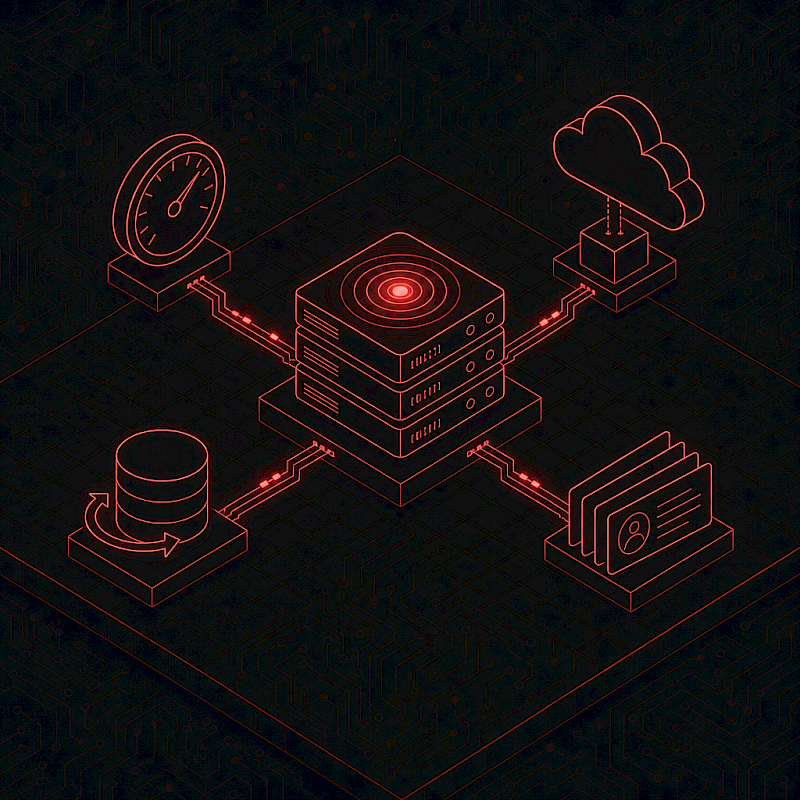
Network monitoring and support
Continuous monitoring of servers, network equipment, and endpoints is what turns IT from reactive to proactive. Issues such as failing drives, expiring certificates, and unusual traffic patterns are flagged before they cause an outage. The support layer behind the monitoring matters just as much: a clear path for users to request help, a ticketing system that does not lose context, and an escalation path for the issues that need a senior engineer.
Cloud management
Most businesses now run a mix of on-premises systems and cloud services. Managing that mix well means keeping an inventory of what runs where, controlling who has access, monitoring spend so it does not drift, and applying the same security standards across both. We cover this in more depth on our Cloud Services page.
Disaster recovery and continuity
Disaster recovery is the discipline of making sure that, when something goes wrong, the business can keep operating. The two questions that drive every plan are how much data you can afford to lose and how long you can afford to be down. The answers determine the design: how often backups run, where they are stored, how quickly they can be restored, and which systems get priority. Just as important is testing the plan on a schedule. A backup that has never been restored is a hope, not a recovery plan.
The case for outsourcing IT management
Outsourcing IT management lets a business focus on its core objectives while benefiting from expert oversight, reduced downtime, and predictable costs. In practice, the value tends to show up in four places:
- Predictable spend. Monthly fees in place of unpredictable break-fix invoices, with capital expenses planned rather than reactive.
- Reduced downtime. Issues caught and resolved before users notice them, instead of after.
- Broader expertise. Access to specialists across networking, security, cloud, and end-user support, rather than relying on one or two generalists.
- Operational consistency. The same standards applied across every site, every endpoint, and every cloud environment.
How to evaluate a managed services partner
If you are considering a managed services engagement, a few questions tend to surface the differences between providers:
- What is monitored, how often, and who responds when an alert fires after hours?
- How are tickets prioritized, and what is the escalation path for issues that need senior attention?
- How are security patches and configuration changes tested and rolled out?
- How will the relationship evolve as the business grows or contracts?
If you would like to talk through what a managed services engagement could look like for your environment, you can reach the team through our Managed IT Services page or our contact page.